Any MSME registered under the Udyam Registration portal can sign up as a seller, along with corporate buyers, government departments, PSUs, and RBI-licensed financiers (banks and NBFCs).

TReDS Platform India: The Future of MSME Financing
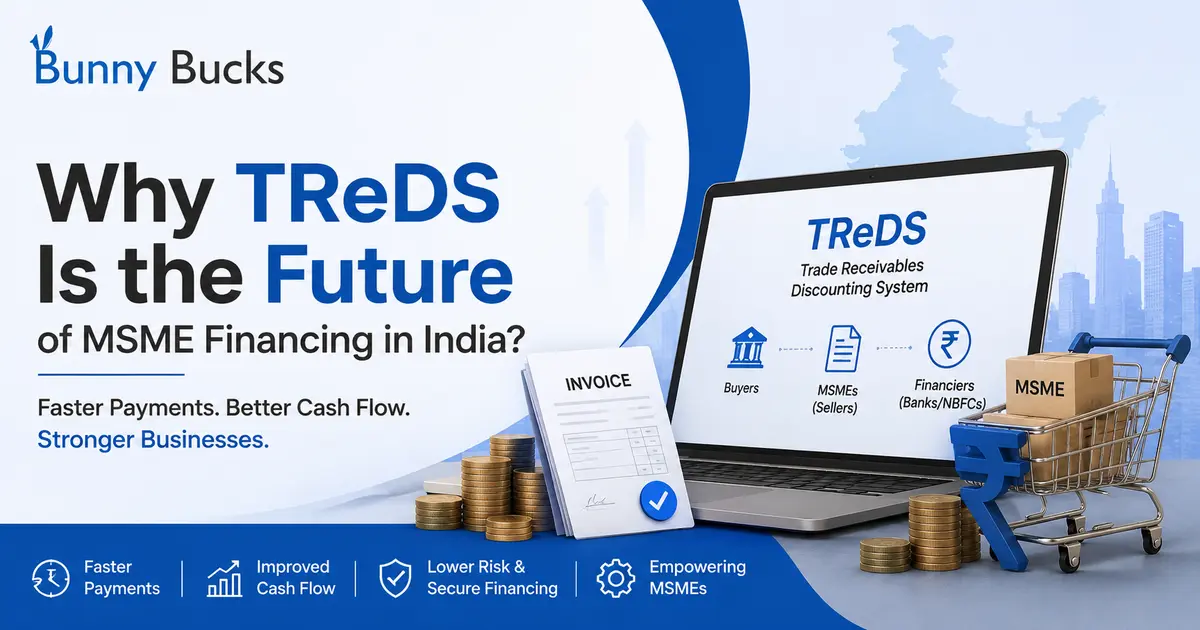
TReDS Platform India: The Future of MSME Financing
If you run an MSME in India and you're tired of waiting 60, 90, or even 120 days to get paid by a big buyer, a TReDS platform is the fastest legal way to fix that.
TReDS stands for Trade Receivables Electronic Discounting System. It's an RBI-regulated online marketplace where you sell your unpaid invoices to financiers and get cash in your account within 24 to 72 hours, instead of waiting for your buyer's payment cycle to end.
No collateral. No personal guarantee. No lengthy loan file.
That's the short answer. Now let's get into why this matters so much right now, and how you actually use it.
What Is TReDS and How Does It Work?
Picture this: you're a small manufacturer supplying parts to a large automobile company. You raise an invoice for ₹10 lakh with 90-day credit terms.
Instead of sitting on that invoice for three months, here's what happens on a TReDS platform :
- You upload the invoice (already accepted by your buyer) onto the platform.
- Banks and NBFCs registered as financiers bid on it, competing to offer you the lowest discount rate.
- You pick the best bid.
- Money hits your account in 1-3 working days.
- On the due date, your buyer pays the financier directly. You're out of the picture by then.
This whole system runs on a three-party structure: MSME seller, corporate buyer, and financier, all connected through one digital platform regulated by the RBI.
Quick takeaway: TReDS turns your invoice into instant working capital, and the financing cost is decided by open bidding, not a bank manager's mood.
How TReDS Can Help MSMEs?
Cash flow problems kill more small businesses than bad products or bad clients do.
Here's where TReDS actually moves the needle for MSMEs:
- Faster payments: Get funds in days, not months.
- No collateral required: Financing is based on the invoice and the buyer's credit standing, not your assets.
- Better rates through competition: Multiple financiers bid, so you're not stuck with one bank's terms.
- Off-balance-sheet financing: Since it's invoice discounting, it doesn't always show up as debt the way a term loan does.
- Builds a credit trail: A steady history of invoice discounting on TReDS strengthens your profile for future funding.
Think of it this way: your invoice is no longer a piece of paper waiting in a drawer. It's a liquid asset the moment your buyer approves it.
For MSMEs supplying to large corporates or PSUs, where 60-90 day payment terms are standard, this single feature can be the difference between taking a new order and turning it down for lack of working capital.
TReDS Automation Made Smart and Compliant With CashFlo
Manually chasing invoice approvals, uploading documents, and tracking bids across platforms eats up time you don't have.
This is where automation-first players like CashFlo are changing the game. Instead of treating TReDS as a manual, paperwork-heavy process, CashFlo layers automation on top of the compliance framework, so:
- Invoice uploads and buyer approvals sync automatically with your accounting or ERP system.
- Compliance checks (GST validation, buyer credit checks) happen in the background.
- You get real-time visibility into which invoices are financed, pending, or due.
For a growing MSME juggling multiple buyers, that kind of automation isn't a nice-to-have. It's what makes TReDS practical to use every single month instead of once in a while when you're desperate for cash.
Which TReDS Platform Is the Best in India?
There's no single "best" platform for every business. It depends on your buyer network, industry, and the financiers already active on that platform.
That said, here's a simple comparison to help you evaluate:
| Factor | What to Check |
|---|---|
| Financier base | More banks/NBFCs bidding = better rates |
| Buyer onboarding | Is your key buyer already registered? |
| Turnaround time | How fast do bids get settled? |
| Tech & automation | Does it integrate with your accounting tools? |
| Support for MSME onboarding | How easy is the registration process? |
Rather than picking blind, check where your top 2-3 buyers are already registered. That single factor usually decides which platform makes sense for you.
What Are the RBI-Approved TReDS Platforms in India?
The RBI licenses and regulates every TReDS operator in the country. As of now, the RBI-approved TReDS platforms include:
- BunnyBucks
- Invoicemart (A.TReDS Limited)
- CashFlo TReDS
Each of these operates under RBI's guidelines, meaning your funds, your data, and the bidding process are all supervised under a formal regulatory structure. Always confirm a platform's current authorization on the Reserve Bank of India website before registering.
Quick takeaway: Always confirm a platform's RBI license before registering. It's a one-minute check that protects you from unregulated intermediaries claiming to offer "invoice discounting."
TReDS Benefits for Corporates and Buyers
TReDS isn't just an MSME tool. Corporate buyers get real advantages too:
- Vendor stability: MSME suppliers with healthy cash flow deliver more reliably.
- Extended payment terms: Buyers can still negotiate longer credit periods since the MSME gets paid early by the financier, not the buyer.
- Better compliance optics: Using TReDS shows regulators and stakeholders that a company supports MSME payment timelines, which matters under the MSME Development Act's payment provisions.
- Reduced vendor risk: Fewer supply chain disruptions caused by supplier cash crunches.
In short, TReDS creates a situation where the buyer isn't rushed to pay early, and the MSME isn't stuck waiting. Everyone wins except the financing gap.
Conclusion
TReDS has quietly become one of the most practical financing tools available to Indian MSMEs today.
It's fast. It's collateral-free. It's regulated by the RBI. And it puts your invoices to work instead of letting them sit as dead weight on your books.
If you're an MSME supplying to large corporates and still waiting months to get paid, it's worth checking whether your buyers are already on a TReDS platform.
Ready to fix your cash flow gaps? Talk to BunnyBucks about MSME financing options and find out which TReDS platform fits your business in under 10 minutes.
Frequently Asked Questions
-
Who can register on the TReDS platform?
-
Is TReDS registration mandatory for companies in India?
Yes, for specific categories. Companies with a turnover above ₹250 crore, and Central Public Sector Enterprises, are mandated by the government to onboard onto a TReDS platform for MSME payments.
-
What are the benefits of TReDS for MSMEs?
Faster access to cash (often within 1-3 days), no collateral requirement, competitive discount rates through bidding, and reduced dependence on traditional bank loans.
-
Does TReDS require collateral for invoice financing?
No. Financing on TReDS is based on the buyer's creditworthiness and the accepted invoice itself, not on assets or personal guarantees from the MSME seller.
-
How is TReDS different from a regular business loan?
A business loan is debt you repay with interest over time. TReDS is invoice discounting: you're getting early access to money you've already earned, and your buyer settles the amount directly with the financier on the due date.